 nojetlag
Jet Lag New York to Tokyo (JFK–HND): Easier Than It Looks
Westbound protocol (despite flying east) · JFK → HND · effective 10-hour shift · Last updated & sources reviewed: August 2026
On This Page
- Why This Route Feels the Way It Does
- Recovery Timeline
- Before You Fly
- In Flight
- On Arrival
- Know Your Airports: JFK and HND
- What to Buy
- What You Can't Pack
- Frequently Asked Questions
- Key Takeaways

Tokyo runs 14 hours ahead of New York, which sounds like the worst eastward trip imaginable. It isn't. Past a 12-hour gap the body realigns the short way round, making this an effective 10-hour westward shift — the gentler direction. Expect around 7 days for full realignment, and 3–4 to feel broadly functional. Counterintuitively, this is the easier half of the New York–Tokyo round trip.
A note on seasonal variation: the US observes daylight saving and Japan does not, so the gap is 13 or 14 hours depending on the season and the effective shift 10 or 11. Flight timings on this page are approximate estimates that vary by season, airline and winds. Operational planning in this guide follows three primary evidence anchors: recovery speed is usually approximately one circadian hour per day eastward and somewhat faster westward (Waterhouse et al., 2007); light timing effects follow the human phase response curve, so morning and evening exposure can shift the clock in opposite directions (Khalsa et al., 2003); and melatonin evidence is strongest for correctly timed short-term use after eastbound travel (Herxheimer & Petrie, 2002). For practical timing details, see our melatonin guide. If you use melatonin, check timing and interactions with a pharmacist or doctor.
Why This Route Feels the Way It Does
The direction inverts. Tokyo is ahead on the clock, so this reads as eastward travel. But a 14-hour advance is a longer journey for the circadian system than a 10-hour delay, and the body takes the shorter road. That makes the physiological task a westward phase delay: staying up later, sleeping later, seeking light in the evening. If you arrive in Tokyo and dutifully chase morning light because you flew east, you'll be working against yourself.
Departure timing varies more than on most routes. Flights on this pairing leave New York across a remarkably wide spread — from just after midnight to early afternoon — and the strategy shifts accordingly. A 00:35 departure and a 14:05 departure land you in very different states, so this is one route where the generic "sleep on the plane" advice genuinely doesn't survive contact with the specific booking.
You lose a calendar day. Leaving New York on Monday puts you in Tokyo on Tuesday regardless of how long you were airborne. Worth building into any itinerary with fixed commitments at the far end.
A caveat. On shifts above 12 hours the direction of re-entrainment is less predictable than the arithmetic implies, and reputable sources differ on whether to count the raw gap or the short path. Take these numbers as planning estimates.
Recovery Timeline
| Day | What's happening | What to do |
|---|---|---|
| Day of travel | Very long crossing; a calendar day disappears | Set the destination clock at the gate and plan sleep against the arrival time, not the departure |
| Day 1 in Tokyo | Early waking likely; daytime energy often better than expected | Evening light; hold out for a plausible Tokyo bedtime |
| Days 2–4 | Wake time drifting later, most travelers broadly functional | Consistent bedtime; resist collapsing early |
| Days 5–7 | Convergence, with occasional early-morning waking | Normal routine |
Westward-equivalent recovery is faster but produces its own signature: waking at 03:00 or 04:00 Tokyo time for the first several days is the norm here, not a sign of failure.
Before You Fly
- Shift sleep later by 30–60 minutes in the three or four nights before departure. Easier to do than shifting earlier, which is part of why this direction is kinder.
- Get evening light at home in the run-up.
- Don't over-prepare. Beyond about two hours of pre-shift, the disruption to your last days in New York outweighs the benefit.
In Flight
- Check your actual departure time before planning sleep. On a departure just after midnight you'll want to sleep early in the flight; on an early-afternoon departure the calculation is completely different. This route more than most rewards looking at the specific booking.
- Set your phone to Tokyo time at the gate.
- Skip alcohol — fourteen hours is the longest exposure in this series.
- Move and hydrate regularly. On a crossing this length, immobility contributes as much to how you feel on landing as the time change does.
- Charge every device before boarding. Japan's power bank rules (below) mean you cannot top up in the air.
On Arrival
- Seek evening light in Tokyo. For a westward-equivalent delay this is the active tool. Morning light works against you here despite the eastward flight.
- Hold out for a local bedtime, 21:00 Tokyo time at the earliest. An evening walk does double duty.
- Expect to wake very early for the first several days. Keep lights low if you're up before dawn — bright light then pulls the clock backwards.
- Eat at Tokyo times from the first meal.
Know Your Airports: JFK and HND
Departing from John F. Kennedy International Airport (JFK)
- Confirm your terminal within 24 hours. JFK spreads across eight terminals with no airside connector, and assignments keep moving as the redevelopment programme continues through 2026.
- Three-hour international buffer, with each terminal running its own checkpoint.
- Build in 20–30 minutes for traffic around the Van Wyck Expressway during peak hours.
Arriving at Haneda Airport (HND)
Haneda's great advantage over Narita is proximity: roughly 14–20 km from central Tokyo, typically under an hour door to door, against 60–90 minutes from Narita. On a route where you'll land tired from a 14-hour flight, that difference matters more than it sounds.
- International arrivals use Terminal 3, though some ANA services use Terminal 2 — worth confirming.
- The Keikyu Line is usually the best way in: fast, cheap, direct to Shinagawa and onward to the Yamanote Line. The Tokyo Monorail to Hamamatsucho is the scenic alternative.
- Pick up a Suica card in the arrivals area. Having transit and convenience-store payment sorted before you're jet-lagged in a Tokyo station is worth the five minutes.
- Japan's departure tax rose to ¥3,000 per person in July 2026 — relevant when you leave, not when you arrive, but easy to forget to budget for.
A Few Fun Facts to Pass the Time in Line
At JFK:
- The airport opened in 1948 as Idlewild and took the Kennedy name in 1963.
- A dedicated animal terminal called "The ARK" handles horses, birds and pets moving as cargo.
- Eero Saarinen's 1962 TWA Flight Center now operates as a hotel, with a bar inside a restored 1958 Lockheed Constellation.
- The pylon light installation that marked the entrance for two decades was removed in 2025–2026 for roadway works.
At HND:
- Haneda has been rated the world's cleanest airport by Skytrax and placed third overall in the 2025–2026 survey.
- Terminal 3 has a recreated Edo-period shopping street.
- The airport lost essentially all international traffic when Narita opened, then reclaimed much of it after Terminal 3 opened in 2010.
- It sits inside Tokyo proper, which is why it consistently beats Narita on arrival convenience.
What to Buy
For the flight itself
This is the longest crossing in the series — compression socks, eye mask and earplugs all earn their place. Charge everything before boarding: you cannot use a power bank in flight on Japanese routes.
For your first days in Tokyo
A Suica or Pasmo card, sorted at the airport. Comfortable walking shoes, because evening light exposure in Tokyo is best obtained by walking and the city rewards it. If you take melatonin, note this is physiologically a westward trip despite flying east — the timing differs from the eastbound pattern.
Souvenirs and local specialties
From New York, before you fly:
- Coffee from a Brooklyn roaster travels well and is genuinely hard to source in Tokyo.
- MTA subway map merchandise from the transit authority's official store.
- Skip anything fresh — Japanese quarantine on produce and meat is strict and enforced.
From Tokyo, before you fly home:
- Region-exclusive KitKat flavours, light and hard to find elsewhere.
- Ceremonial-grade matcha from a proper tea shop rather than the duty-free blend.
- A Japanese knife, checked baggage only — it cannot travel in the cabin.
What You Can't Pack
Flying out of JFK (TSA rules)
- 3-1-1 liquids: containers over 3.4 oz (100ml) go in the hold.
- Power banks in carry-on only, never checked; over 27,000mAh (100Wh) banned from both.
- Foldable knives and multi-tools banned from carry-on regardless of blade length.
- Butane styling tools and spare cartridges banned from checked baggage.
- Alcohol above 140 proof banned entirely.
Flying out of HND — for your return or connections (Japanese rules)
Japan's battery rules are stricter than most travelers expect and changed in 2026:
- Maximum two power banks per passenger, each 160Wh or under, cabin only.
- In-flight use banned as of April 2026 — no charging your phone from one, no charging it from a seat outlet. This applies to flights to and from Japan, including transits.
- Keep power banks visible, not in the overhead bin.
- Liquids: 100ml containers in a single 1-litre clear bag.
- All blades banned from the cabin, including nail clippers and scissors.
- One lighter, on your person. Torch and windproof jet lighters banned outright.
- Duty-free liquids bought abroad may be confiscated at a Japanese security check if you're connecting onward.
Confirm with your airline and the national regulator before departure. Battery rules are changing quickly across the region.
Frequently Asked Questions
How long does jet lag from New York to Tokyo actually last? About 7 days for full realignment, with 3–4 to feel broadly functional. The 14-hour clock difference works out to an effective 10-hour shift, and because that shift runs westward physiologically, recovery is faster than the raw number suggests.
I'm flying east — why does this page tell me to seek evening light? Because past a 12-hour gap the physiological direction inverts. A 14-hour advance is a longer road for the body than a 10-hour delay, so it takes the delay. Chasing morning light here would slow you down.
Why is the return trip harder than the outbound? Same inversion, opposite sign. Tokyo to New York works out as an eastward advance, which biology resists. Same route, same hours in the air, roughly three extra days of recovery.
Should I book the earliest or latest departure? It genuinely matters on this route, given departures span from just after midnight to early afternoon. A later departure landing in Tokyo late afternoon gives you the cleanest run at a first local bedtime.
Key Takeaways
- The 14-hour clock gap becomes an effective 10-hour shift via the shorter circadian path.
- That shift runs westward physiologically despite the eastward flight — evening light, not morning.
- Baseline recovery is about 7 days, compressible to 3–4, making this the easier half of the round trip.
- Departure times span 14 hours on this route: check your specific booking before planning in-flight sleep.
This article reflects general circadian rhythm research and is not medical advice. Individual recovery time varies. This page contains affiliate links; we may earn a commission at no extra cost to you.
Sources
- Waterhouse J., Reilly T., Atkinson G., Edwards B. (2007). Jet lag: trends and coping strategies. The Lancet. https://pubmed.ncbi.nlm.nih.gov/17398311/
- Khalsa S.B.S., Jewett M.E., Cajochen C., Czeisler C.A. (2003). A phase response curve to single bright light pulses in human subjects. Journal of Physiology. https://doi.org/10.1113/jphysiol.2003.040477
- Herxheimer A., Petrie K.J. (2002). Melatonin for the prevention and treatment of jet lag. Cochrane Database of Systematic Reviews. https://doi.org/10.1002/14651858.CD001520
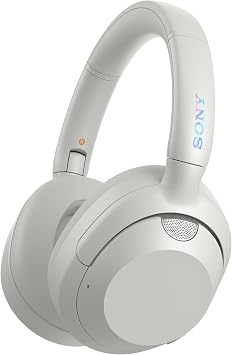 Sony ULT WEAR Noise Canceling Wireless Headphones
Blocks engine noise for in-flight rest.
See product Joint Genius Travel Neck Pillow Premium Memory Foam
Stops head drop for real in-flight sleep.
See product URJD Universal Travel Adapter 100W GaN
Charge all devices in 200+ countries.
See product Contoured blackout sleep mask
Protects your sleep window from stray light.
See product Graduated compression socks
Supports circulation on long flights.
See product Vanicream Daily Facial Moisturizer with Ceramides & Hyaluronic Acid
Rehydrates skin after dry cabin air.
See product Epielle Makeup Remover Wipes
Freshen face on arrival without a sink.
See product GuruNanda Disposable Travel Toothbrush 2.0 (21 ct)
Brush & floss on the go, no water needed.
See product