 nojetlag
Jet Lag Los Angeles to Tokyo (LAX–NRT): Timeline & Recovery Plan
Westbound protocol (despite flying east) · LAX → NRT · effective 7-hour shift · Last updated & sources reviewed: August 2026
On This Page
- Why This Route Feels the Way It Does
- Recovery Timeline
- Before You Fly
- In Flight
- On Arrival
- Know Your Airports: LAX and NRT
- What to Buy
- What You Can't Pack
- Frequently Asked Questions
- Key Takeaways

Tokyo sits 17 hours ahead of Los Angeles — a number that sounds punishing and isn't. Because the body realigns the shorter way round, this works out as a 7-hour westward shift, the mildest of the long-haul routes covered here. Expect roughly 5 days for full realignment and 2–3 to feel functional. The flight is long; the jet lag is moderate.
A note on seasonal variation: California observes daylight saving and Japan does not, so the gap is 16 or 17 hours depending on the season and the effective shift 7 or 8 hours. Flight timings here are approximate estimates that vary with season, airline and winds. Operational planning in this guide follows three primary evidence anchors: recovery speed is usually approximately one circadian hour per day eastward and somewhat faster westward (Waterhouse et al., 2007); light timing effects follow the human phase response curve, so morning and evening exposure can shift the clock in opposite directions (Khalsa et al., 2003); and melatonin evidence is strongest for correctly timed short-term use after eastbound travel (Herxheimer & Petrie, 2002). For practical timing details, see our melatonin guide. If you use melatonin, check timing and interactions with a pharmacist or doctor.
Why This Route Feels the Way It Does
Seventeen hours becomes seven. The clock difference is among the largest on any commercial route, but circadian adjustment doesn't work in raw clock hours. Past a 12-hour gap the shorter path wins, and here that's a 7-hour delay rather than a 17-hour advance. The practical upshot: this Pacific crossing is easier to recover from than a New York–London hop, despite being nearly twice as long in the air.
But the flight itself is the harder part. Eleven and a half hours westbound into prevailing winds, arriving in Tokyo the following calendar day. Travel fatigue — dehydration, immobility, poor cabin sleep — accounts for more of how bad you feel on arrival here than circadian misalignment does. Those two things resolve on different timescales: travel fatigue clears in a day or two, the clock shift takes five.
The date line adds a day. Leave Los Angeles Monday, arrive Tokyo Tuesday. Nothing to do with jet lag, everything to do with itinerary planning.
A caveat. On gaps this large the direction of re-entrainment is less predictable than the arithmetic implies, and sources differ on how to count it. Treat the figures as planning estimates.
Recovery Timeline
| Day | What's happening | What to do |
|---|---|---|
| Day of travel | Long westbound crossing; a calendar day disappears | Set Tokyo time at the gate; expect fatigue that isn't jet lag |
| Day 1 in Tokyo | Early waking common; daytime energy often decent | Evening light; hold out for a local bedtime |
| Days 2–3 | Travel fatigue clearing; wake time drifting later | Consistent bedtime, meals on Tokyo time |
| Days 4–5 | Near-full alignment | Normal routine |
Separating the two effects helps: if you feel wrecked on day one but slept badly on the plane, much of that is the flight rather than the clock.
Before You Fly
A 7-hour westward-equivalent shift needs modest preparation:
- Shift sleep later by 30–45 minutes for two or three nights before departure.
- Get evening light in the run-up.
- Prioritise arriving rested over pre-adjusting aggressively. On this route the flight does more damage than the time change, so banking sleep beats fine-tuning your clock.
In Flight
- Set your phone to Tokyo time at the gate.
- Sleep according to Tokyo's night. On a late-morning or midday LAX departure, the useful sleep window falls in the second half of the flight.
- Hydrate seriously. Eleven-plus hours of cabin air is the dominant variable in how you feel on landing, more than the time zones are.
- Move every couple of hours.
- Charge every device before boarding — Japanese routes no longer permit in-flight power bank use.
On Arrival
- Evening light in Tokyo is the active tool for a westward-equivalent delay. Morning light works against you here despite the eastward flight.
- Hold out for a Tokyo bedtime, 21:00 at the earliest.
- Expect early waking for the first few days; keep lights low if you're up before dawn.
- Factor in the trip from Narita. It's 60–90 minutes to central Tokyo, which lands awkwardly at the end of an eleven-hour flight. Book the train or transfer in advance so it isn't a decision you make while exhausted.
Know Your Airports: LAX and NRT
Departing from Los Angeles International Airport (LAX)
Nine terminals arranged around a U-shaped two-level roadway. Most international departures use Tom Bradley International Terminal (TBIT), officially Terminal B, between Terminals 3 and 4 — though plenty of international flights also leave from the numbered terminals.
- Walking distances are substantial. Terminal 1 to Terminal 7 is a 20–25 minute walk. Check your terminal early rather than discovering it at the curb.
- Airside connections have improved: you can now walk from Terminal 1 through to Terminal 8 without leaving the secure area, roughly two miles end to end.
- Rideshare and taxi pickups run through LAX-it, a centralized lot east of Terminal 1, rather than the terminal curbs. Drop-offs still happen at the terminals. Budget time for it.
Arriving at Narita International Airport (NRT)
Three terminals, 60 km east of central Tokyo. Terminals 1 and 2 serve full-service carriers, Terminal 3 the low-cost airlines.
- Narita is the far Tokyo airport. Allow 60–90 minutes into the city — by Narita Express, Keisei Skyliner, or bus. This is the single biggest practical difference from Haneda.
- There's a night curfew: aircraft generally cannot take off or land between roughly 23:00 and 06:00, a legacy of the noise agreements made with local communities. Terminals keep some areas open 24 hours, but most public areas run 05:00 to midnight.
- Terminal 3 has no train station of its own — it's a 10-minute walk or short shuttle from Terminal 2.
- Pick up a Welcome Suica card at the JR East Travel Service Center in Terminal 1 or 2 arrivals.
A Few Fun Facts to Pass the Time in Line
At LAX:
- The Theme Building, opened in 1961, is a Space Age "flying saucer on four legs" and a defining example of Googie architecture. It became a city Historical-Cultural Monument in 1993.
- Its Encounter restaurant was redesigned with help from Walt Disney Imagineering, and closed permanently in 2013.
- Tom Bradley International Terminal's curved aluminium roof was designed to echo Pacific waves when seen from above.
- The 26 illuminated pylons and giant LAX sign that marked the entrance from 2000 were removed in 2025–2026 for roadway works.
At NRT:
- Narita was built over fierce local opposition. Farmers in Sanrizuka, joined by student activists, fought the plans for over a decade in what became known as the Sanrizuka Struggle; the airport opened in 1978 under extreme security.
- The night curfew exists because of the noise concerns raised during that dispute — it is a live legacy of the protests, not a technical constraint.
- Terminals 1 and 2 have large outdoor observation decks.
- Terminal 3 was designed like a running track, with a coloured walking lane instead of moving walkways.
What to Buy
For the flight itself
Eleven-plus hours justifies the full kit: compression socks, eye mask, earplugs, refillable bottle. On this route hydration matters more than usual, because travel fatigue rather than circadian shift is the main driver of how you'll feel. Charge everything before boarding.
For your first days in Tokyo
Pre-book your Narita transfer — an hour and a half of decisions at the end of a long flight is exactly what you don't want. A Suica card. Comfortable shoes for evening walks, which double as light exposure.
Souvenirs and local specialties
From Los Angeles, before you fly:
- California wine, checked baggage only, and note Japan's duty limits.
- Something from a Southern California coffee roaster.
- Skip fresh produce entirely — Japanese quarantine is strict.
From Tokyo, before you fly home:
- Narita's Terminal 1 "Narita Nakamise" shopping street is genuinely good for traditional souvenirs, better than the average airport offering.
- Region-exclusive KitKat flavours.
- Anime and character goods, which Narita stocks more heavily than most airports.
What You Can't Pack
Flying out of LAX (TSA rules)
- 3-1-1 liquids: over 3.4 oz (100ml) goes in the hold.
- Power banks in carry-on only; over 27,000mAh (100Wh) banned from both.
- Foldable knives and multi-tools banned from carry-on.
- Alcohol above 140 proof banned entirely.
Flying out of NRT — for your return or connections (Japanese rules)
- Maximum two power banks, each 160Wh or under, cabin only.
- In-flight power bank use banned since April 2026 on flights to and from Japan.
- Power banks must stay visible, not in overhead bins.
- Liquids: 100ml containers in one 1-litre clear bag.
- All blades banned from the cabin, including nail clippers.
- One lighter, carried on your person; torch and jet lighters banned outright.
- Duty-free liquids bought abroad may be confiscated at Japanese security if you're connecting.
Confirm with your airline and the national regulator before departure.
Frequently Asked Questions
How long does jet lag from LA to Tokyo actually last? Around 5 days for full realignment, 2–3 to feel functional. The 17-hour clock gap works out as an effective 7-hour westward shift, which is why this is milder than the raw number implies.
Why does a 17-hour time difference only cause 7 hours of jet lag? Because the circadian system realigns by the shortest route. Advancing 17 hours is a longer journey than delaying 7, so the body delays. The maximum meaningful shift on any route is 12 hours.
I'm flying east — why does this page say to seek evening light? The physiological direction inverts on gaps above 12 hours. Following eastward advice here would work against your adjustment.
Should I fly into Narita or Haneda if I have the choice? For arrival convenience, Haneda — it's inside Tokyo, roughly 30–40 minutes from the centre against 60–90 from Narita. After eleven hours in the air, that's a meaningful difference.
Key Takeaways
- The 17-hour clock gap becomes an effective 7-hour shift, the mildest long-haul in this series.
- That shift runs westward physiologically despite the eastward flight — evening light, not morning.
- Travel fatigue from an eleven-hour crossing accounts for more of day one than jet lag does; the two clear on different timescales.
- Narita is 60–90 minutes from central Tokyo: pre-book the transfer rather than deciding on arrival.
This article reflects general circadian rhythm research and is not medical advice. Individual recovery time varies. This page contains affiliate links; we may earn a commission at no extra cost to you.
Sources
- Waterhouse J., Reilly T., Atkinson G., Edwards B. (2007). Jet lag: trends and coping strategies. The Lancet. https://pubmed.ncbi.nlm.nih.gov/17398311/
- Khalsa S.B.S., Jewett M.E., Cajochen C., Czeisler C.A. (2003). A phase response curve to single bright light pulses in human subjects. Journal of Physiology. https://doi.org/10.1113/jphysiol.2003.040477
- Herxheimer A., Petrie K.J. (2002). Melatonin for the prevention and treatment of jet lag. Cochrane Database of Systematic Reviews. https://doi.org/10.1002/14651858.CD001520
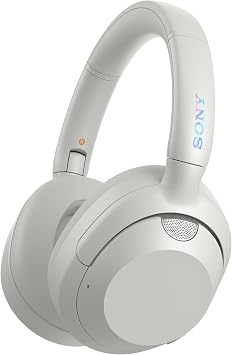 Sony ULT WEAR Noise Canceling Wireless Headphones
Blocks engine noise for in-flight rest.
See product Joint Genius Travel Neck Pillow Premium Memory Foam
Stops head drop for real in-flight sleep.
See product URJD Universal Travel Adapter 100W GaN
Charge all devices in 200+ countries.
See product Contoured blackout sleep mask
Protects your sleep window from stray light.
See product Graduated compression socks
Supports circulation on long flights.
See product Vanicream Daily Facial Moisturizer with Ceramides & Hyaluronic Acid
Rehydrates skin after dry cabin air.
See product Epielle Makeup Remover Wipes
Freshen face on arrival without a sink.
See product GuruNanda Disposable Travel Toothbrush 2.0 (21 ct)
Brush & floss on the go, no water needed.
See product