 nojetlag
Jet Lag London to New York (LHR–JFK): Recovery Timeline & Plan
Westbound protocol · LHR → JFK · 5 time zones · Last updated & sources reviewed: August 2026
On This Page
- Why This Route Feels the Way It Does
- Recovery Timeline
- Before You Fly
- In Flight
- On Arrival
- Know Your Airports: LHR and JFK
- What to Buy
- What You Can't Pack
- Frequently Asked Questions
- Key Takeaways
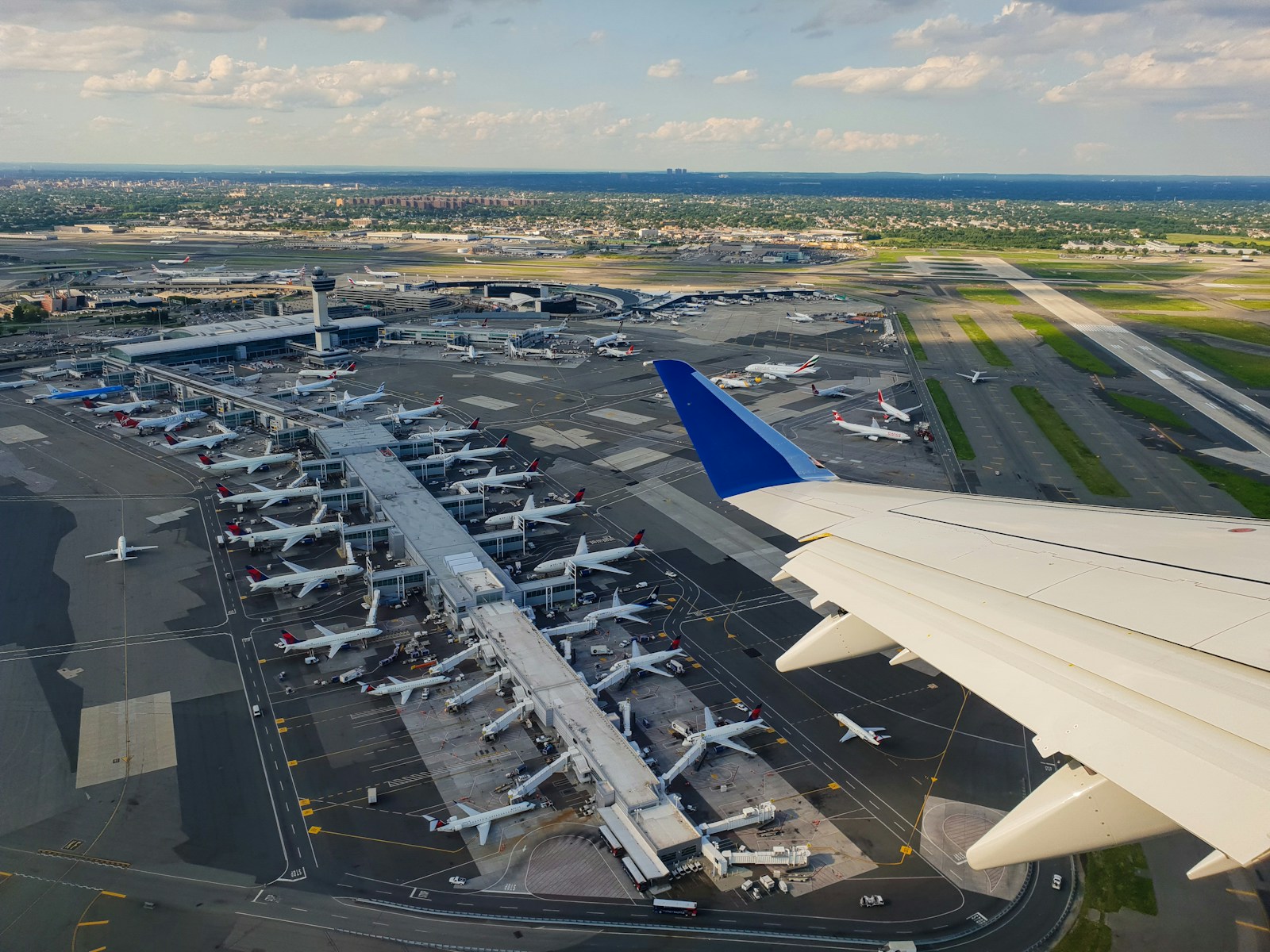
Flying from London to New York means crossing 5 time zones westward. Westward adjustment runs faster than eastward — roughly 1.5 hours per day rather than one — so expect about 4 days for full circadian realignment, and 2–3 days to feel broadly functional with sensible light timing. This is the easier half of the transatlantic round trip.
A note on seasonal variation: UK and US clock changes fall on different dates, so for a week or two each spring and autumn the gap is 4 hours rather than 5. Flight times differ by direction too: westbound crossings fly into the jet stream and typically run somewhere around 7h30m–8h45m, noticeably longer than the eastbound return. All timings on this page are approximate estimates that vary by season, airline, aircraft and winds — check your specific booking.
This guide covers why this direction is gentler, and how to avoid the specific trap it sets.
Photo: Miguel Ángel Sanz / Unsplash Operational planning in this guide follows three primary evidence anchors: recovery speed is usually approximately one circadian hour per day eastward and somewhat faster westward (Waterhouse et al., 2007); light timing effects follow the human phase response curve, so morning and evening exposure can shift the clock in opposite directions (Khalsa et al., 2003); and melatonin evidence is strongest for correctly timed short-term use after eastbound travel (Herxheimer & Petrie, 2002). For practical timing details, see our melatonin guide. If you use melatonin, check timing and interactions with a pharmacist or doctor.
Why This Route Feels the Way It Does
Direction works with you. Most human circadian clocks run slightly longer than 24 hours, so the body finds it easier to stretch a day than to compress one. Flying west means staying up later and sleeping later — going with the natural drift instead of fighting it. That's why the same five zones cost you noticeably less coming this way than going out.
The daytime flight changes the problem entirely. Unlike the eastbound leg, most LHR–JFK departures leave in the late morning or afternoon and land in New York while it's still light — approximate, and worth confirming against your own booking, since schedules vary by season and carrier. You don't lose a night in transit. That removes the sleep deprivation that makes the outbound day one so rough — but it introduces a different trap.
The trap is the first evening. You land in the afternoon with your body already convinced it's late evening. The pull toward an early collapse is strong, and giving in to it at 18:00 New York time is the single most common way travelers stretch a four-day adjustment into a week. The work on this route happens on the first night, not the first morning.
The outbound leg (JFK → LHR) is eastbound and harder: it runs overnight, costs you a night of sleep, and needs morning light rather than evening light on arrival.
Recovery Timeline
| Day | What's happening | What to do |
|---|---|---|
| Day of travel | Daytime crossing, no night lost; strong evening sleepiness on arrival | Stay up to a plausible local bedtime — 21:00 at the earliest |
| Day 1 in New York | Early waking (03:00–05:00 is common), fine daytime energy | Get evening light; avoid bright light in the early morning hours |
| Days 2–3 | Wake time drifting later, most travelers broadly functional | Hold a consistent bedtime; resist early nights |
| Day 4 | Near-full alignment for most travelers | Normal routine |
Westward recovery is faster but not effortless: early-morning waking is the characteristic symptom here, where the eastbound leg produces trouble falling asleep instead.
Before You Fly
A 5-hour westward shift needs less preparation than the same shift eastward, but a little helps:
- Move sleep 30–60 minutes later in the two or three nights before departure. Easier to do than shifting earlier, which is part of why this direction is kinder.
- Get evening light at home. Light later in your day pushes the clock in the direction you need.
- Don't over-prepare. Shifting more than about two hours before a westward trip usually isn't worth the disruption to your last days at home.
In Flight
- Set your phone to New York time at the gate. The decisions that follow — when to eat, whether to nap — should be made against the destination clock.
- Stay awake for most of it. This is the opposite of the eastbound advice. A daytime crossing arriving in New York afternoon works best if you land tired enough to reach a local bedtime. A short nap in the first couple of hours is fine; sleeping the whole way is counterproductive.
- Skip alcohol. Eight hours is long enough for it to meaningfully worsen both dehydration and the sleep you'll want that night.
- Hydrate and move. The westbound leg is the longer of the two, and cabin dryness compounds over what is typically eight hours or so.
On Arrival
- Get outdoor evening light. For westward travel you want light late in your day — it delays the clock in the direction you need. This is the reverse of the eastbound protocol, and getting it backwards actively slows recovery.
- Hold out for a plausible bedtime. Aim for 21:00 New York time at the absolute earliest. A walk after dinner does double duty: evening light and enough activity to get you there.
- Expect to wake early. Waking at 04:00 on the first night or two is normal on this route, not a sign the strategy has failed.
- If you wake early, keep the lights low. Bright light before dawn pulls the clock the wrong way. Read on a dim screen rather than turning on the kitchen lights.
- Eat at local times even when your appetite is out of step.
Know Your Airports: LHR and JFK
Departing from Heathrow Airport (LHR)
- The two-bag limit is enforced at the checkpoint: a cabin bag plus one personal item. Anything beyond that gets checked, which is an unwelcome discovery at the front of a queue.
- Liquids are easier than you remember. Heathrow's CT scanner rollout means containers up to 2 litres are permitted and you don't need to remove liquids or electronics from your bag. If you're connecting onward from JFK, though, pack to the stricter US standard instead.
- Know your terminal before you set off. Heathrow's terminals are numbered 2 to 5 with no Terminal 1, and the rail connections differ: Heathrow Express serves a station between Terminals 2 and 3, while Terminals 4 and 5 have their own.
- Security opens around 04:30, though this varies by airline and terminal — relevant only if you've somehow drawn a very early departure on a route that mostly flies mid-morning.
Arriving at John F. Kennedy International Airport (JFK)
- Immigration is the variable. US customs and immigration on arrival can take significant time depending on the bank of flights landing around you. If you're connecting onward, note that JFK has no airside connector between all terminals — you'll collect bags, exit, and clear security again at the new terminal.
- AirTrain between terminals is free; the fee only applies when you exit at Howard Beach or Jamaica to connect into the city.
- Ground transport is slower than the map suggests. Ongoing construction around the Van Wyck Expressway and the New Terminal One project adds 20–30 minutes at peak times, and pickup zones have moved during the works. Worth checking rather than assuming.
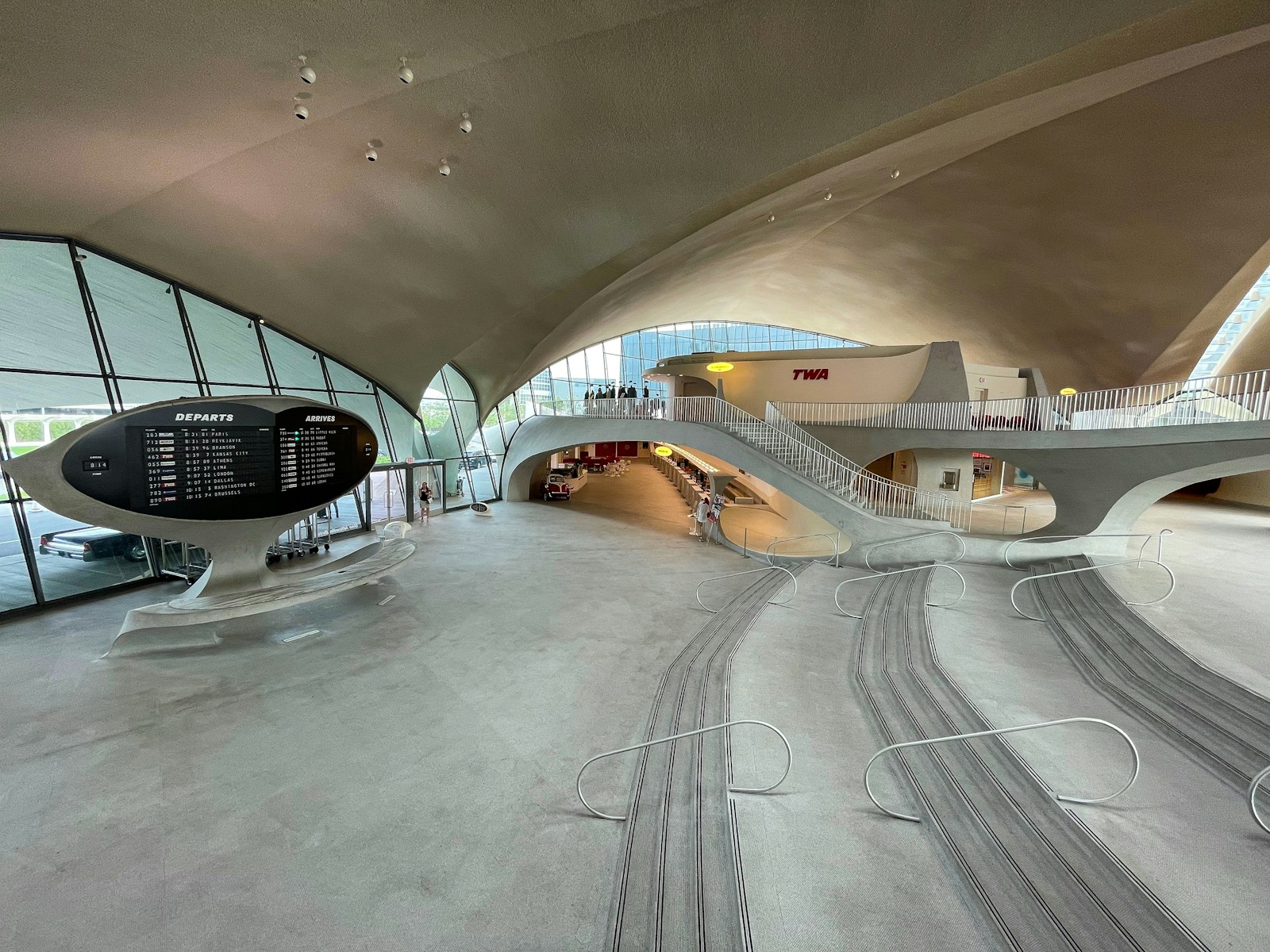
A Few Fun Facts to Pass the Time in Line
At LHR:
- Heathrow opened in 1930 as a single grass runway, and was called London Airport until 1966.
- Terminal 3, not Terminal 1, was the first of the current terminals to open, welcoming passengers in 1961.
- A fully built but never-used railway platform sits beneath Terminal 5 — a "ghost station" for a rail link that never happened.
- Two unmarked VIP suites exist somewhere in the airport: the Royal Suite and the Windsor Suite. Their exact locations aren't public.
At JFK:
- The airport opened in 1948 as Idlewild, built over the former Idlewild Golf Course, and was renamed in 1963.
- The Bay Runway (31L) is the second-longest in the United States and was once a designated backup Space Shuttle landing site.
- The whole airport sits on former marshland — the TWA Hotel's underground conference centre needed steel piles to stop it floating upward rather than sinking.
- "The ARK" is a dedicated animal terminal handling horses, birds, dogs and cats, with its own wellness facilities.
What to Buy
For the flight itself
The westbound leg is the longer one, so compression socks and a refillable bottle earn their place. An eye mask matters less here than on the overnight eastbound flight — you're mostly trying to stay awake. What helps more: downloaded films, a book, anything that keeps you from drifting off for four hours mid-Atlantic.
For your first evening in New York
A power bank, and something that gets you outdoors after landing — evening light is the active ingredient on this route. If you take melatonin, note that westward travel needs different timing from eastward — worth checking before assuming the eastbound approach transfers.
Souvenirs worth the suitcase space
From London, before you fly:
- Tea, straightforwardly the best use of the space. Fortnum & Mason and Whittard both have Heathrow concessions airside.
- British-formulation chocolate, which differs enough from the US version to be worth carrying.
- A Paddington Bear item, or something from a museum shop — the British Museum and V&A both do well-designed pieces that survive a suitcase.
From New York, before you fly home:
- Coffee from a Brooklyn roaster — travels better than most things and is genuinely hard to source in the UK.
- Something using the real MTA subway map design, from the transit authority's official store.
- Hot sauce or a pantry item from a Manhattan specialty grocer, if you have checked baggage. Note the liquid rules if you don't.
What You Can't Pack
These come from national regulators rather than your airline, and differ by departure country.
Flying out of LHR (UK rules)
- Liquids up to 2 litres are permitted in hand luggage following Heathrow's CT scanner rollout, and you don't need to remove liquids or electronics from your bag.
- But the allowance doesn't transfer. A 500ml bottle cleared at Heathrow can be refused at an airport still on the 100ml rule — including on any onward US connection. If you're transferring, pack to 100ml.
- Two-bag limit at the security checkpoint.
- One lighter per person, carried on your person rather than in a bag. E-cigarettes are permitted in hand luggage but must not be used or charged in flight.
Flying out of JFK — for your return or any connection (TSA rules)
- The 3-1-1 liquid rule still applies. The US has not adopted the larger-container exception, so containers over 3.4 oz (100ml) go in checked baggage.
- Spare lithium batteries and power banks in carry-on only, never checked. Anything over 27,000mAh (100Wh) is banned from both.
- Foldable utility knives and multi-tools are banned from carry-on regardless of blade length.
- Butane-powered styling tools and spare gas cartridges are banned from checked baggage.
- Alcohol above 140 proof is banned entirely — relevant if you were considering a high-proof spirit as a gift.
Confirm current rules on gov.uk and the TSA site before departure — screening technology is being updated faster than most travel guides.
Frequently Asked Questions
How long does jet lag from London to New York actually last? About 4 days for full circadian realignment. Westward adjustment runs at roughly 1.5 hours per day rather than the one hour per day of eastward travel, which is why this leg recovers faster than the outbound. Most travelers feel broadly functional within 2–3 days.
Is it better to sleep on the flight or stay awake? Stay awake, mostly — the opposite of the advice for the eastbound leg. This is a daytime crossing landing in New York afternoon, and the goal is to arrive tired enough to reach a local bedtime. A short nap early on is fine; sleeping the whole way makes the first night harder.
Why do I keep waking at 4am in New York? That's the characteristic westward symptom. Your clock still thinks it's morning in London. It resolves over the first few days — accelerated by evening light exposure and slowed by bright light before dawn, so keep the lights low if you're up early.
Does melatonin help on this specific route? It's better evidenced for eastward travel than westward, and the timing for a westbound trip is different from what most people assume. Worth discussing with a pharmacist or doctor rather than carrying over an eastbound routine.
Key Takeaways
- LHR–JFK crosses 5 time zones westward, the gentler direction for circadian adjustment.
- Baseline recovery is about 4 days, compressible to 2–3 with evening light and a disciplined bedtime.
- The characteristic symptom here is early waking, not difficulty falling asleep.
- Evening light is the active tool — the reverse of the eastbound protocol, and getting it backwards slows recovery.
This article reflects general circadian rhythm research and is not medical advice. Individual recovery time varies. This page contains affiliate links; we may earn a commission at no extra cost to you.
Sources
- Waterhouse J., Reilly T., Atkinson G., Edwards B. (2007). Jet lag: trends and coping strategies. The Lancet. https://pubmed.ncbi.nlm.nih.gov/17398311/
- Khalsa S.B.S., Jewett M.E., Cajochen C., Czeisler C.A. (2003). A phase response curve to single bright light pulses in human subjects. Journal of Physiology. https://doi.org/10.1113/jphysiol.2003.040477
- Herxheimer A., Petrie K.J. (2002). Melatonin for the prevention and treatment of jet lag. Cochrane Database of Systematic Reviews. https://doi.org/10.1002/14651858.CD001520
 Sony ULT WEAR Noise Canceling Wireless Headphones
Blocks engine noise for in-flight rest.
See product Joint Genius Travel Neck Pillow Premium Memory Foam
Stops head drop for real in-flight sleep.
See product URJD Universal Travel Adapter 100W GaN
Charge all devices in 200+ countries.
See product Contoured blackout sleep mask
Protects your sleep window from stray light.
See product Graduated compression socks
Supports circulation on long flights.
See product Vanicream Daily Facial Moisturizer with Ceramides & Hyaluronic Acid
Rehydrates skin after dry cabin air.
See product Epielle Makeup Remover Wipes
Freshen face on arrival without a sink.
See product GuruNanda Disposable Travel Toothbrush 2.0 (21 ct)
Brush & floss on the go, no water needed.
See product